VascularInterventional
DVT Mechanical Thrombectomy
A specialized catheter procedure that physically extracts blood clots from deep veins, rapidly restoring blood flow and preventing long-term damage.
Mechanical thrombectomy is a catheter-based procedure that physically removes acute DVT clot from the iliofemoral veins — restoring venous patency rapidly and reducing the risk of long-term post-thrombotic syndrome compared to anticoagulation alone.
Book a Consultation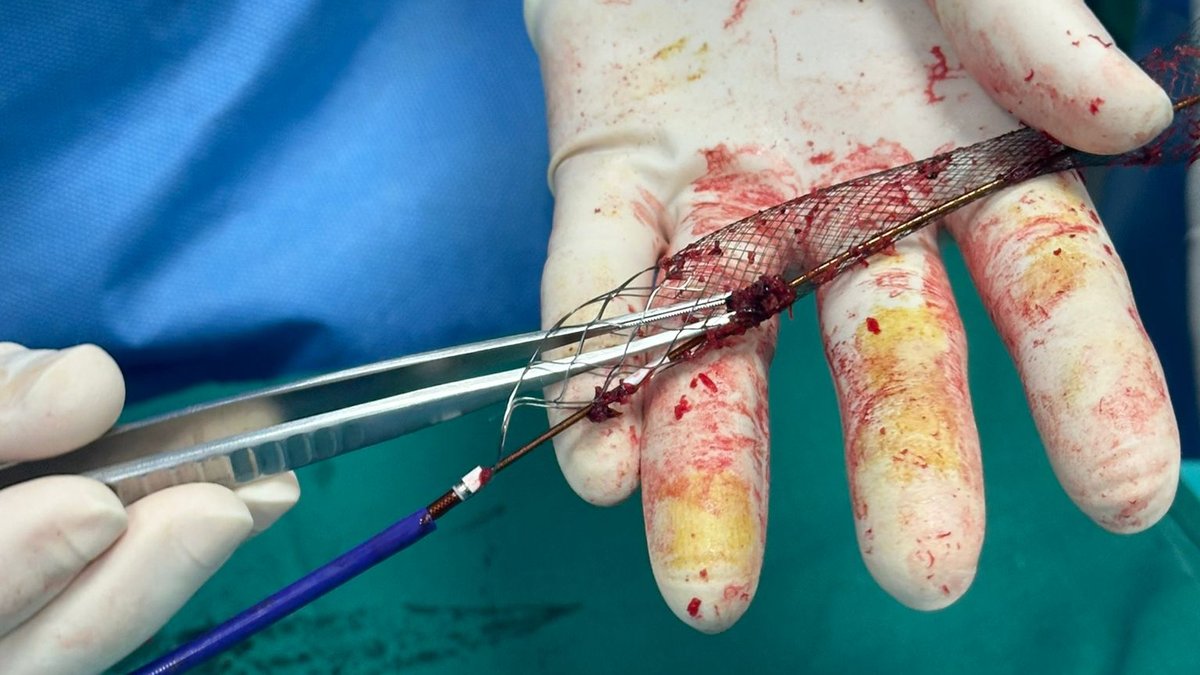
Catheter-based mechanical extraction effectively removes fresh thrombus from the deep veins, rapidly restoring normal venous flow.
Removing the Clot Rather Than Waiting for It to Dissolve
A large deep vein thrombosis in the thigh and pelvis does not just cause a swollen, painful leg now. In up to a third of people it leaves lasting damage — chronic swelling, aching, and skin changes or ulcers known as post-thrombotic syndrome — because the clot scars the vein and wrecks its valves.
Mechanical thrombectomy tackles this by physically pulling the fresh clot out through a catheter, in a single session, rather than relying on blood thinners to slowly dissolve it over months. Clearing the vein early gives the valves the best chance of surviving intact.
Mechanical thrombectomy tackles this by physically pulling the fresh clot out through a catheter, in a single session, rather than relying on blood thinners to slowly dissolve it over months. Clearing the vein early gives the valves the best chance of surviving intact.

Who It Helps
It is not needed for every DVT — a clot confined to the calf, or a smaller thigh clot with mild symptoms, is treated with anticoagulation alone. Thrombectomy is considered when:
- The clot is extensive, involving the iliac and femoral veins, and less than about two weeks old
- The leg is very swollen, painful and hard to use
- The limb is threatened by a massive clot cutting off outflow (phlegmasia) — a true emergency
- The patient is young and active, where preventing post-thrombotic syndrome matters most
The Procedure
Through a small puncture behind the knee or in the neck, and under X-ray guidance, a catheter is passed into the clotted vein. A mechanical device grips and withdraws the thrombus, often in one pass. If the scan shows the left iliac vein is being pinched by an overlying artery — May-Thurner syndrome, a common hidden cause — a stent is placed to hold it open. The procedure takes one to two hours, usually under sedation, with an overnight stay.
Recovery and Follow-Up
The leg swelling typically improves within a day or two. You will need a blood thinner for at least three to six months, sometimes longer or indefinitely if a lasting clotting tendency is found; blood tests for an inherited or acquired thrombophilia are arranged when the DVT had no obvious trigger. A graduated compression stocking, worn during the day for up to two years, further lowers the risk of post-thrombotic syndrome. A follow-up ultrasound confirms the vein — and any stent — has stayed open.
DVT Mechanical Thrombectomy: Common Questions
Considering DVT Mechanical Thrombectomy?
Dr. Peter Chang will assess your suitability and discuss all treatment options during a specialist consultation at Paragon Medical Centre, Singapore.