VascularInterventional
Pulmonary Embolectomy
A life-saving procedure that rapidly extracts massive blood clots from the lungs using a specialized catheter.
Catheter-based pulmonary embolectomy uses large-bore mechanical thrombectomy to rapidly remove clot from the pulmonary arteries — indicated for massive and intermediate-high-risk pulmonary embolism when anticoagulation alone is insufficient.
Book a Consultation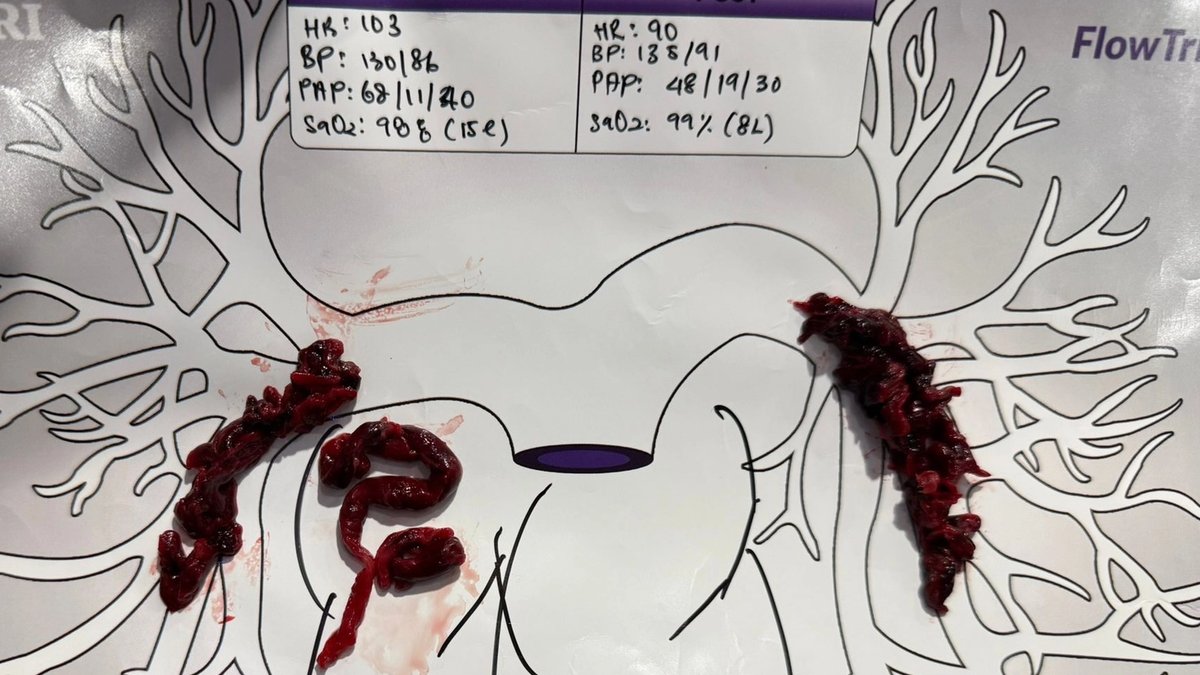
Large-bore catheters can rapidly extract life-threatening pulmonary embolisms, stabilizing the patient's cardiovascular system.
When a Lung Clot Is Too Big to Wait Out
A pulmonary embolism is a clot — almost always broken off from a leg DVT — that lodges in the arteries of the lungs. A small one is treated with blood thinners alone. A large one suddenly blocks a big share of the blood leaving the heart, the right side of the heart strains against the obstruction, blood pressure falls, and the situation can become life-threatening within hours.
Catheter embolectomy is for those large clots. A wide catheter is guided into the lung arteries and used to suck the clot out directly, unloading the heart straight away rather than waiting days for medication to work.
Catheter embolectomy is for those large clots. A wide catheter is guided into the lung arteries and used to suck the clot out directly, unloading the heart straight away rather than waiting days for medication to work.

Deciding Who Needs It
The decision hinges on how much strain the clot is putting on the heart:
- High-risk (massive) PE — blood pressure is already dropping or the patient has collapsed; immediate clot removal or clot-busting drugs are needed
- Intermediate-high-risk PE — blood pressure is holding, but scans show the right heart is struggling and blood markers of heart strain are up; catheter treatment is increasingly chosen here to prevent deterioration
- Low-risk PE — the heart is coping; blood thinners alone, often with early discharge
How It Is Done
Through a vein in the groin, under X-ray guidance, a large-bore catheter is advanced to the clot in the main pulmonary arteries. The clot is aspirated out in one or more passes, and a repeat angiogram confirms flow has been restored. Where mechanical removal is unsuitable, a thinner catheter can drip a low dose of clot-dissolving drug directly into the clot over several hours, with far less bleeding risk than a full systemic dose. Complex cases are discussed rapidly by a Pulmonary Embolism Response Team.
Afterwards
You will need anticoagulation for at least three to six months, and often longer or lifelong if the PE had no clear trigger or a lasting clotting tendency is found. A follow-up echocardiogram checks that the right side of the heart has recovered. If breathlessness on exertion persists beyond three months, we screen for chronic thromboembolic pulmonary hypertension — an uncommon but treatable condition where old clot has scarred the lung arteries.
Pulmonary Embolectomy: Common Questions
Considering Pulmonary Embolectomy?
Dr. Peter Chang will assess your suitability and discuss all treatment options during a specialist consultation at Paragon Medical Centre, Singapore.