Venous
Varicose Veins
Swollen, twisted veins that you can see just under the surface of the skin, usually in the legs.
Varicose veins are enlarged, twisted veins that develop when valves inside the leg veins weaken, causing blood to pool rather than return efficiently to the heart. They are signs of underlying venous insufficiency that can progress to chronic swelling and skin changes if untreated.
Book a Consultation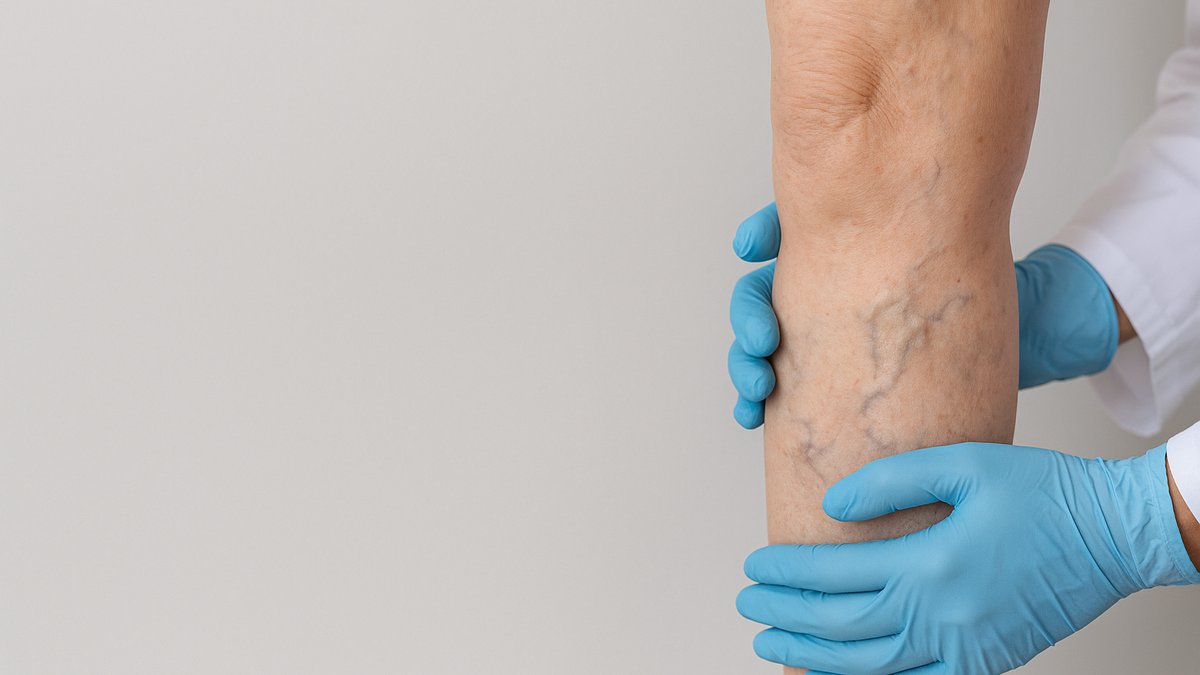
Varicose veins occur when blood pools in the legs due to weakened valves, potentially leading to swelling and discomfort.
Varicose Veins: A Valve Problem, Not Just a Cosmetic One
The veins in your legs have to move blood upward, against gravity, back to the heart. They do it with the help of tiny one-way valves that stop blood falling back down between muscle squeezes. When those valves weaken and leak, blood pools in the lower leg, the vein stretches under the pressure, and over time it becomes the twisted, rope-like bulge you can see under the skin.
Varicose veins are extremely common — roughly a third of adults have them — and they are often waved away as cosmetic. In many people they are harmless. But they are the visible sign of chronic venous disease, which in a proportion of people progresses to swelling, skin damage and, at the far end, leg ulcers.
Varicose veins are extremely common — roughly a third of adults have them — and they are often waved away as cosmetic. In many people they are harmless. But they are the visible sign of chronic venous disease, which in a proportion of people progresses to swelling, skin damage and, at the far end, leg ulcers.

What You Might Feel
Symptoms do not always match the size of the veins — some people have large veins and no discomfort, others have modest veins and a great deal.
- Aching, heaviness or throbbing in the legs, worse after standing or sitting for long periods and by the end of the day
- Itching over a vein, night-time calf cramps, and restless legs
- Ankle swelling that appears by evening and settles overnight
- Relief with walking, elevating the legs, or wearing compression
When It Is More Than Veins: Red Flags
Certain changes mean the venous disease has advanced and should be assessed promptly rather than watched.
- Darkening or hardening of the skin around the ankle, or a patch of venous eczema
- A healed or open ulcer near the inner ankle
- A vein that becomes suddenly hard, red and tender (superficial thrombophlebitis)
- Bleeding from a thin-walled vein after a minor knock

Diagnosis: The Duplex Ultrasound
The one essential test is a venous duplex ultrasound, done standing. It shows which veins are leaking and how badly, whether the deep veins are healthy, and rules out a deep vein thrombosis.
This is what separates true reflux that will benefit from treatment from purely cosmetic spider veins, and it is the map every treatment plan is built on. In Singapore a duplex scan costs roughly SGD 250 to SGD 450 privately, and we perform and interpret it at Paragon Medical Centre on Orchard Road.
This is what separates true reflux that will benefit from treatment from purely cosmetic spider veins, and it is the map every treatment plan is built on. In Singapore a duplex scan costs roughly SGD 250 to SGD 450 privately, and we perform and interpret it at Paragon Medical Centre on Orchard Road.

Treatment: From Stockings to Keyhole Ablation
For mild or purely cosmetic veins, conservative measures — graduated compression, regular walking, leg elevation and weight management — control symptoms well.
- Endovenous thermal ablation (radiofrequency or laser) — the modern standard for a leaking main vein; done under local anaesthetic, you walk out the same day
- Non-thermal options (medical adhesive ‘glue’, or mechanochemical ablation) — useful when tumescent anaesthetic injections are best avoided
- Foam sclerotherapy — injections for smaller tributary veins and for recurrences
- Surgical stripping is now rarely needed
- Treatment of symptomatic varicose veins is generally Medisave-claimable in Singapore and done as day surgery
After Treatment, and Preventing Recurrence
Expect to wear compression for one to two weeks, walk daily from day one, and have some bruising and tightness along the treated vein that settles over a few weeks. Most people are back to desk work within a day or two.
Varicose veins can recur over the years because the underlying tendency remains and new veins can develop; this is not a sign the procedure failed. Keeping to a healthy weight, staying active, avoiding long unbroken periods of standing, and wearing compression on long flights or heavy standing days all reduce the chance. Crossing your legs does not cause varicose veins.
Varicose veins can recur over the years because the underlying tendency remains and new veins can develop; this is not a sign the procedure failed. Keeping to a healthy weight, staying active, avoiding long unbroken periods of standing, and wearing compression on long flights or heavy standing days all reduce the chance. Crossing your legs does not cause varicose veins.
Varicose Veins: Common Questions
Concerned About Varicose Veins?
Dr. Peter Chang offers specialist assessment and personalised management at Paragon Medical Centre, Singapore.