Heart
Heart Murmur
An extra or unusual sound heard during a heartbeat, often indicating a problem with a heart valve.
Heart valve disease — including aortic stenosis, mitral regurgitation, and rheumatic mitral stenosis — affects the heart's ability to pump blood effectively. A heart murmur signals turbulent blood flow, though not all murmurs indicate disease.
Book a Consultation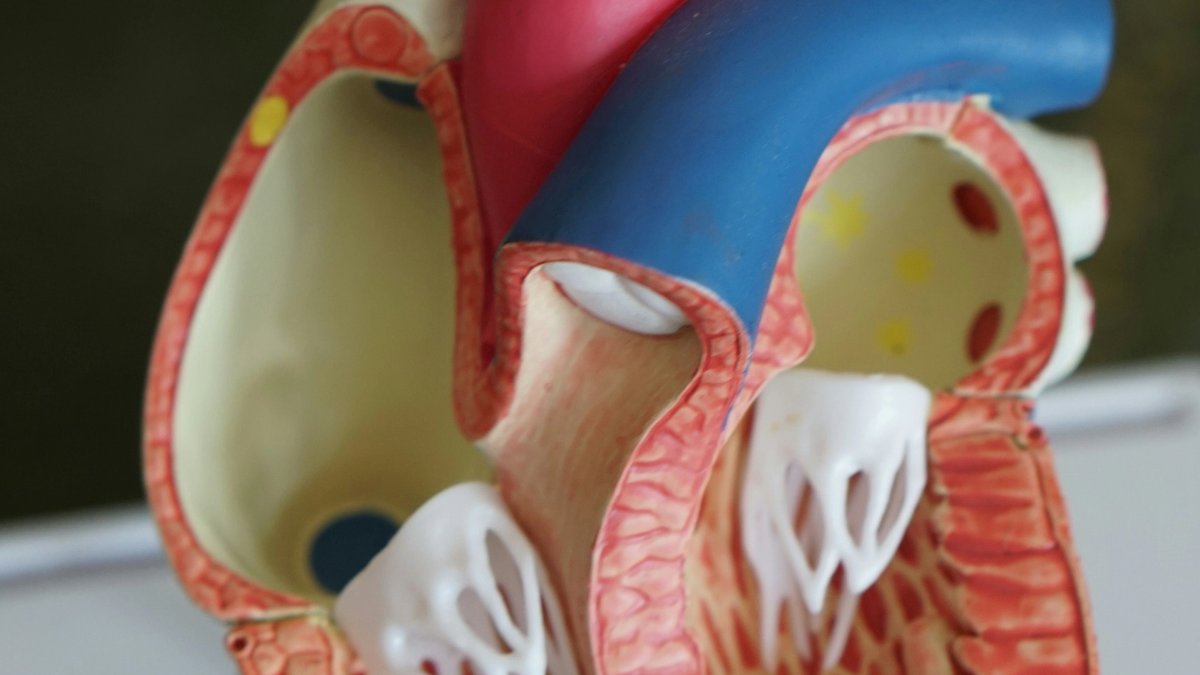
While some heart murmurs are harmless, others indicate underlying structural issues with the heart's valves that require attention.
A Murmur Is a Sound, Not a Diagnosis
A heart murmur is simply an extra noise the stethoscope picks up when blood flows turbulently through the heart. Many murmurs are completely innocent — common in children, in pregnancy, and whenever blood is flowing faster than usual, as with a fever or anaemia. These need no treatment and often disappear.
The clinical task is to sort the harmless from the meaningful. A murmur can also be the first clue to a stiff or leaky heart valve, and the character, timing and location of the sound point us in the right direction. In practice, one test — an echocardiogram — settles the question quickly and painlessly.
The clinical task is to sort the harmless from the meaningful. A murmur can also be the first clue to a stiff or leaky heart valve, and the character, timing and location of the sound point us in the right direction. In practice, one test — an echocardiogram — settles the question quickly and painlessly.
The Valves, and What Goes Wrong
The heart has four valves, and each can fail in one of two ways: it can become too tight to open (stenosis) or fail to close fully so blood leaks backward (regurgitation).
- Aortic stenosis — the outlet valve stiffens and calcifies with age; the most important valve problem in adults over 65
- Mitral regurgitation — the valve between the left chambers leaks, often from a prolapse or age-related degeneration
- Aortic regurgitation — the outlet valve leaks, allowing blood to fall back into the pumping chamber
- Mitral stenosis — usually a legacy of childhood rheumatic fever, still seen in older Singaporeans and in migrants from the region
Symptoms Are Often the Last Thing to Appear
Valves compensate quietly for years, so a significant problem can exist long before you feel anything. When symptoms do arrive they are usually about effort and fluid: breathlessness climbing stairs, less stamina than before, chest tightness, palpitations, or swollen ankles.
One pattern needs urgent attention: fainting or near-fainting on exertion, particularly with a known aortic murmur, points to severe aortic stenosis and should be assessed within days, not weeks.
One pattern needs urgent attention: fainting or near-fainting on exertion, particularly with a known aortic murmur, points to severe aortic stenosis and should be assessed within days, not weeks.

How We Assess a Murmur in Singapore
After listening carefully and taking your history, the key test is a transthoracic echocardiogram — an ultrasound that shows each valve moving and measures how tight or leaky it is.
Depending on the findings we may add a stress echo to check the valve under exertion, a transoesophageal echo (a probe passed into the gullet) for fine detail, or a cardiac CT when planning a valve procedure. Mild or moderate disease is simply watched with a repeat scan every one to three years. This is all available at Paragon Medical Centre on Orchard Road.
Depending on the findings we may add a stress echo to check the valve under exertion, a transoesophageal echo (a probe passed into the gullet) for fine detail, or a cardiac CT when planning a valve procedure. Mild or moderate disease is simply watched with a repeat scan every one to three years. This is all available at Paragon Medical Centre on Orchard Road.

Treatment: From Watchful Waiting to Keyhole Valves
Mild valve disease needs no procedure — just monitoring, good blood pressure control and attention to dental health. Once a valve becomes severe and is causing symptoms or straining the heart, it should be fixed, and modern options are far gentler than they were.
- Surgical repair — preferred for a leaking mitral valve, keeping your own tissue
- Surgical valve replacement — a mechanical or tissue valve, via open-heart surgery
- TAVI — a new aortic valve delivered by catheter through the groin, now a standard option for many patients, not only the frail
- Transcatheter mitral edge-to-edge repair (MitraClip) for selected leaking mitral valves
- Balloon valvuloplasty for rheumatic mitral stenosis
Living With a Valve Condition
Most people with a monitored valve problem carry on normally. A few practical points matter: keep your teeth and gums healthy and see a dentist regularly, because mouth bacteria are the usual source of valve infection (endocarditis); if you have a high-risk valve lesion or a prosthetic valve, you may need antibiotic cover before certain dental work.
Activity advice depends on severity — mild disease rarely limits anything, severe aortic stenosis means avoiding heavy exertion until it is treated. Pregnancy with significant valve disease needs planning with a cardiologist. We keep patients under regular echo surveillance from Paragon Medical Centre so that a valve is treated at the right time, not too late.
Activity advice depends on severity — mild disease rarely limits anything, severe aortic stenosis means avoiding heavy exertion until it is treated. Pregnancy with significant valve disease needs planning with a cardiologist. We keep patients under regular echo surveillance from Paragon Medical Centre so that a valve is treated at the right time, not too late.
Heart Murmur: Common Questions
Concerned About Heart Murmur?
Dr. Peter Chang offers specialist assessment and personalised management at Paragon Medical Centre, Singapore.