Vascular
Deep Vein Thrombosis
A blood clot that forms in a vein deep in the body, most often in the leg, which can be dangerous if it breaks loose.
Deep vein thrombosis (DVT) is a blood clot in the deep veins — most commonly in the leg — that requires urgent anticoagulation to prevent pulmonary embolism and long-term post-thrombotic syndrome. Up to half of DVT cases are clinically silent, making imaging confirmation critical.
Book a Consultation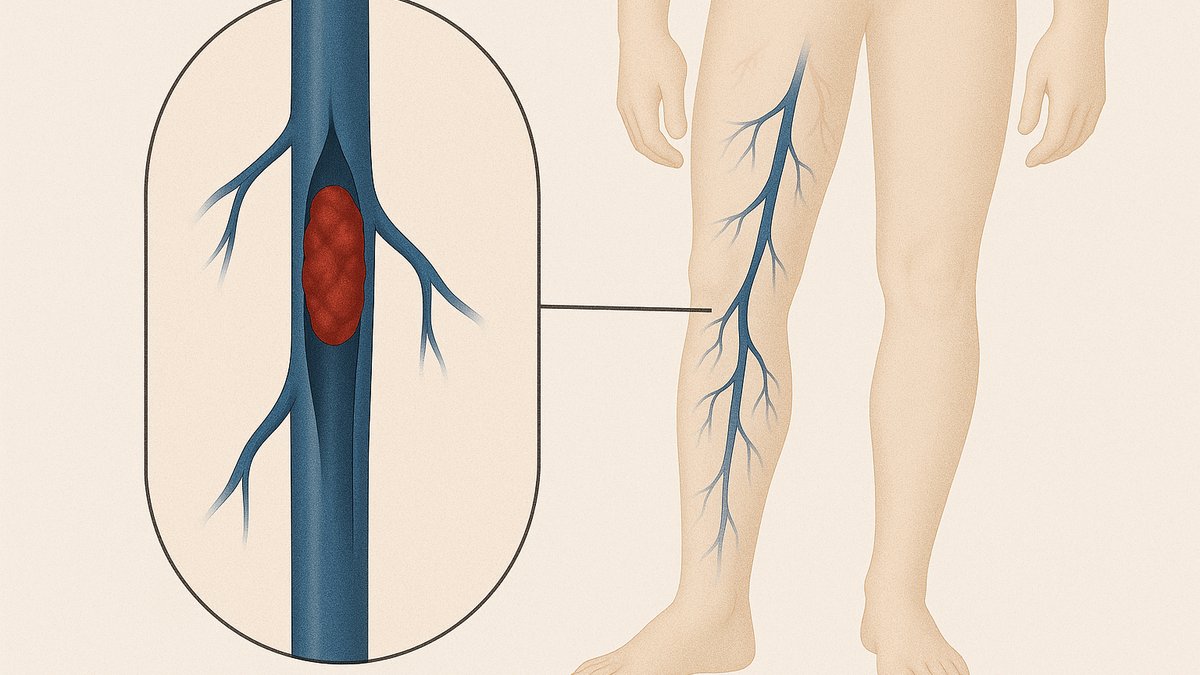
Deep vein thrombosis (DVT) restricts blood flow in the leg and poses a severe risk if the clot breaks off and travels to the lungs.
What a DVT Is, and Why It Matters
A deep vein thrombosis (DVT) is a blood clot in one of the deep veins, usually in the calf or thigh, that carry blood back up the leg towards the heart.
It matters for two reasons. First, a piece of the clot can break off and travel to the lungs — a pulmonary embolism — which can be life-threatening. Second, even after the clot is treated, it can leave the vein scarred and its valves damaged, causing years of leg swelling and discomfort (post-thrombotic syndrome). Prompt treatment sharply reduces both. DVT is not rare: it affects one to two people per thousand each year, and more with age.
It matters for two reasons. First, a piece of the clot can break off and travel to the lungs — a pulmonary embolism — which can be life-threatening. Second, even after the clot is treated, it can leave the vein scarred and its valves damaged, causing years of leg swelling and discomfort (post-thrombotic syndrome). Prompt treatment sharply reduces both. DVT is not rare: it affects one to two people per thousand each year, and more with age.

The Signs, and Why Half of DVTs Have None
A DVT classically makes one leg — not both — swell, ache, feel warm and look slightly red or shiny, with tenderness along the calf or inner thigh. The swelling usually comes on over hours to a day or two.
But up to half of DVTs cause little or nothing, and are only found when a pulmonary embolism happens or on a scan done for another reason. Because of this, any new swelling of one leg with no obvious explanation deserves a same-day ultrasound rather than a wait.
But up to half of DVTs cause little or nothing, and are only found when a pulmonary embolism happens or on a scan done for another reason. Because of this, any new swelling of one leg with no obvious explanation deserves a same-day ultrasound rather than a wait.
What Sets Off a Clot
Clots form when blood flows too slowly, the vein wall is injured, or the blood is more prone to clotting — often a combination of these.
- Immobility — a long flight or drive, bed rest, a leg in plaster, or a hospital stay
- Surgery or injury, especially to the hip, knee or pelvis
- A more clot-prone state — active cancer, pregnancy and the weeks after delivery, the oestrogen-containing pill or HRT, and inherited thrombophilia
- Other contributors — obesity, dehydration, significant infection, and older age
Diagnosis in Singapore
We first gauge how likely a DVT is from your symptoms and risk factors (the Wells score). If the probability is low, a normal D-dimer blood test is enough to rule it out.
Otherwise the confirming test is a compression duplex ultrasound of the leg veins — quick, painless, and available on the same day at hospital vascular labs and at Paragon Medical Centre on Orchard Road. For a suspected clot in the pelvis or an arm, a CT or MR venogram is used instead.
Otherwise the confirming test is a compression duplex ultrasound of the leg veins — quick, painless, and available on the same day at hospital vascular labs and at Paragon Medical Centre on Orchard Road. For a suspected clot in the pelvis or an arm, a CT or MR venogram is used instead.

Treatment: Anticoagulation, Usually as Tablets
The mainstay is a blood thinner (anticoagulant), started as soon as the diagnosis is made.
- A direct oral anticoagulant (DOAC) such as rivaroxaban or apixaban is first-line for most people — a tablet, no routine blood monitoring, for a minimum of three months
- Duration depends on the cause: a clot after surgery or a flight is usually treated for three months; an unprovoked or recurrent clot, or ongoing risk such as cancer, often means longer or indefinite treatment
- Catheter-directed clot removal is considered for a large clot in the thigh or pelvis that threatens the limb, or in a young, active patient
- An IVC filter is reserved for the rare situation where anticoagulation genuinely cannot be given
Recovery, and Preventing the Next One
Most people feel much better within a couple of weeks, though the leg can stay swollen for months. Up to 40% of people with a thigh or pelvic DVT develop some degree of post-thrombotic syndrome — chronic aching, swelling and skin changes; staying active, keeping to a healthy weight, elevating the leg when resting, and graduated compression stockings all reduce it.
For future long-haul flights from Singapore, move your legs hourly, stay hydrated, and wear below-knee compression stockings; if you have had an unprovoked DVT, ask about a single preventive heparin injection before very long flights. Knowing whether your clot was provoked or unprovoked shapes all of this, so keep that information to hand.
For future long-haul flights from Singapore, move your legs hourly, stay hydrated, and wear below-knee compression stockings; if you have had an unprovoked DVT, ask about a single preventive heparin injection before very long flights. Knowing whether your clot was provoked or unprovoked shapes all of this, so keep that information to hand.
Deep Vein Thrombosis: Common Questions
Concerned About Deep Vein Thrombosis?
Dr. Peter Chang offers specialist assessment and personalised management at Paragon Medical Centre, Singapore.