Heart
Coronary Artery Disease
A common heart condition where the major blood vessels supplying the heart become narrowed by plaque.
Coronary artery disease occurs when plaque narrows the coronary arteries, reducing blood flow to the heart — leading to angina, heart attack, or heart failure. It is the leading cause of cardiac infarction worldwide.
Book a Consultation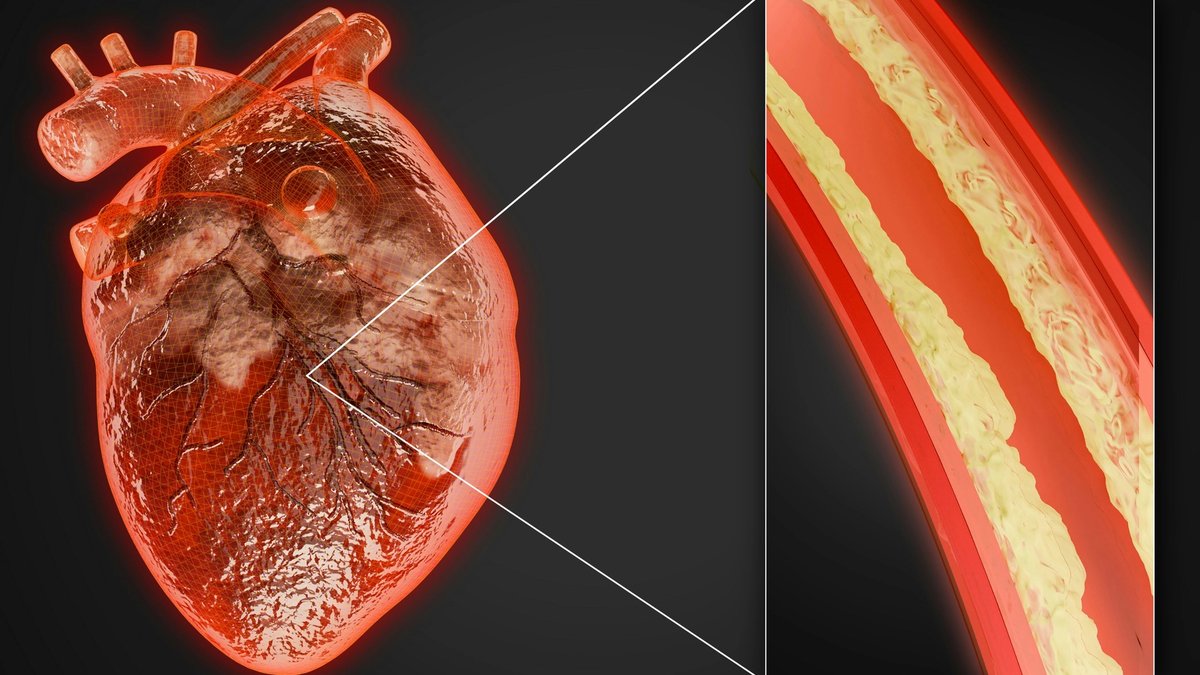
Coronary artery disease develops over time as cholesterol plaque accumulates, restricting vital blood flow to the heart muscle.
Coronary Artery Disease, in Plain Terms
Coronary artery disease (CAD) is the slow furring-up of the arteries that wrap around the outside of your heart and feed the muscle itself. Fatty, cholesterol-rich plaque builds up in the artery wall over decades, narrowing the channel and stiffening the vessel.
It is the common root beneath a great deal of heart trouble: it causes angina, most heart attacks, many abnormal rhythms and a large share of heart failure. For long stretches it produces no symptoms at all, which is both its danger and the opportunity — found early, its course can be bent decisively. In Singapore, where CAD is the leading reason people end up in a cardiac ward, we treat it as a condition to look for actively rather than wait for.
It is the common root beneath a great deal of heart trouble: it causes angina, most heart attacks, many abnormal rhythms and a large share of heart failure. For long stretches it produces no symptoms at all, which is both its danger and the opportunity — found early, its course can be bent decisively. In Singapore, where CAD is the leading reason people end up in a cardiac ward, we treat it as a condition to look for actively rather than wait for.

Decades in the Making: How Plaque Builds
The process starts when LDL cholesterol particles slip into the artery wall and are trapped there. The immune system treats them as a threat, inflammation follows, and a plaque grows — a soft, greasy core under a fibrous cap.
From there, two things can happen. The plaque can enlarge slowly until it limits blood flow, and you feel angina on exertion. Or the cap can suddenly crack, a clot forms on the raw surface, and the artery blocks within minutes — a heart attack. This is why a scan showing ‘only a 40% narrowing’ is not a clean bill of health: it is often the young, soft, inflamed plaques, not the tight old ones, that rupture.
From there, two things can happen. The plaque can enlarge slowly until it limits blood flow, and you feel angina on exertion. Or the cap can suddenly crack, a clot forms on the raw surface, and the artery blocks within minutes — a heart attack. This is why a scan showing ‘only a 40% narrowing’ is not a clean bill of health: it is often the young, soft, inflamed plaques, not the tight old ones, that rupture.
Obstructive vs Non-Obstructive, and Why Women Get Missed
Not all coronary disease shows up as a tight narrowing on an angiogram.
- Obstructive CAD — a plaque narrows the artery by more than about 50 to 70%, limiting flow and causing predictable exertional angina
- Non-obstructive CAD — plaque is present and the arteries are diseased, but no single narrowing is severe. It still raises the risk of a future heart attack
- Microvascular disease — the large arteries look clear, but the tiny vessels fail to widen on demand. It is more common in women and is frequently dismissed as ‘normal arteries’ despite real, limiting symptoms
The Symptoms, When There Are Any
Many people have no warning at all until an event. When symptoms do appear, they are usually about effort: chest tightness or pressure walking up a slope or a flight of stairs, breathlessness, or simply noticing you cannot do what you could a year ago.
Women, people with diabetes and older adults more often feel fatigue, nausea, or an ache in the jaw, upper back or arm rather than classic chest pain. Because the disease is silent for so long, in Singapore we do not rely on symptoms alone in anyone with a strong risk profile — we look.
Women, people with diabetes and older adults more often feel fatigue, nausea, or an ache in the jaw, upper back or arm rather than classic chest pain. Because the disease is silent for so long, in Singapore we do not rely on symptoms alone in anyone with a strong risk profile — we look.
- Chest tightness, pressure or breathlessness brought on by exertion and eased by rest
- A steady fall in how far or fast you can walk before stopping
- Unusual fatigue, or ‘indigestion’ that comes on with activity
- For many, nothing — until angina, a heart attack or an abnormal rhythm announces it

Finding It Before It Finds You: Testing in Singapore
The right test depends on your age, risk factors and whether you have symptoms.
- Coronary artery calcium score — a two-minute CT with no injection that measures calcified plaque directly. A score of zero is genuinely reassuring; a high score reclassifies your risk upward. Around SGD 250 to SGD 500 privately
- CT coronary angiogram — a detailed picture of the arteries themselves, good for ruling significant disease in or out; roughly SGD 900 to SGD 1,500
- Stress echocardiogram or perfusion scan — checks whether part of the heart is starved of blood under exertion
- Invasive angiography with FFR — the definitive map, with a pressure wire to judge whether a borderline narrowing actually matters
Treatment: Medicines First, Then Plumbing
For stable coronary artery disease, the evidence is clear and often surprises people: a well-chosen combination of medication and lifestyle change prevents heart attacks and deaths just as effectively as routinely placing stents. Stents and bypass surgery are reserved for symptoms that medication cannot control, or for high-risk patterns such as left main or severe three-vessel disease.
The medical foundation is a high-intensity statin driving LDL cholesterol below 1.8 mmol/L (below 1.4 if you have had an event), a daily antiplatelet, tight blood pressure and glucose control, and a structured exercise plan. We build and monitor this from Paragon Medical Centre on Orchard Road, and refer for a procedure only when it is genuinely the better option.
The medical foundation is a high-intensity statin driving LDL cholesterol below 1.8 mmol/L (below 1.4 if you have had an event), a daily antiplatelet, tight blood pressure and glucose control, and a structured exercise plan. We build and monitor this from Paragon Medical Centre on Orchard Road, and refer for a procedure only when it is genuinely the better option.

Turning the Curve: What Actually Changes Your Risk
Coronary artery disease responds to effort. Plaque can stabilise, inflammation can settle, and the trajectory can flatten — the artery calcification will not disappear, but the danger it carries is very much modifiable.
- Every 1 mmol/L drop in LDL cholesterol cuts the risk of a major cardiac event by about 22%
- Stopping smoking lowers risk faster than any drug, with benefit visible within a year
- A Mediterranean-style diet, 150 minutes of weekly activity and losing excess weight each add measurable protection
- Treating blood pressure to around 130/80 and keeping diabetes tightly controlled close off the other major pathways
- A cardiac rehabilitation programme brings these together and is worth asking for
Coronary Artery Disease: Common Questions
Concerned About Coronary Artery Disease?
Dr. Peter Chang offers specialist assessment and personalised management at Paragon Medical Centre, Singapore.