Heart
Arrhythmias
Any disturbance in the heart's normal rhythm, making it beat too fast, too slow, or irregularly.
An arrhythmia represents any disturbance in the heart's normal electrical rhythm — causing the heart to beat too fast (tachycardia), too slow (bradycardia), or irregularly. These conditions span from benign palpitations to potentially fatal emergencies.
Book a Consultation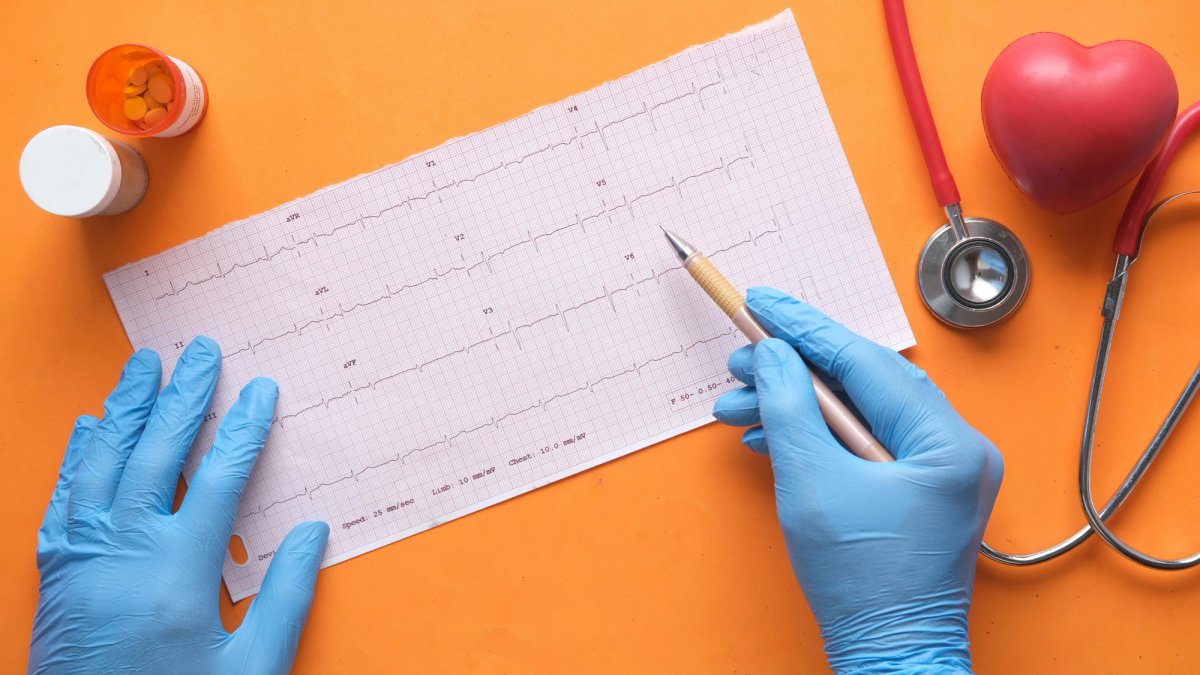
Arrhythmias encompass a range of heart rhythm disturbances that can affect how effectively the heart pumps blood.
Arrhythmia: When the Heart's Wiring Misfires
Every heartbeat starts as an electrical spark in the heart's natural pacemaker, spreads through a set of insulated pathways, and triggers the muscle to squeeze in the right order. An arrhythmia is any fault in that electrical system: the heart beats too fast (tachycardia), too slow (bradycardia), or irregularly.
The word covers an enormous range — from the occasional harmless skipped beat that almost everyone has, to atrial fibrillation, to the rare rhythm that causes a cardiac arrest. Most arrhythmias are not dangerous, but a few are, and the useful ones to recognise are the patterns that come with fainting, collapse, or a heart under strain.
The word covers an enormous range — from the occasional harmless skipped beat that almost everyone has, to atrial fibrillation, to the rare rhythm that causes a cardiac arrest. Most arrhythmias are not dangerous, but a few are, and the useful ones to recognise are the patterns that come with fainting, collapse, or a heart under strain.

The Common Rhythms, Fast to Slow
Each of these has its own page on this site with more detail; here is how they fit together.
- Atrial fibrillation and atrial flutter — fast, disorganised or fast, organised rhythms from the upper chambers; the main concern is stroke
- Supraventricular tachycardia (SVT) — sudden bursts of a fast regular heartbeat, usually not dangerous but very treatable
- Ventricular tachycardia and fibrillation — fast rhythms from the pumping chambers; these can be life-threatening and are the reason some people need a defibrillator
- Bradyarrhythmias — the heart runs too slowly, often from a worn-out natural pacemaker or a block in the wiring; treated with a pacemaker
- Premature beats (ectopics, PVCs) — single early beats felt as a thump or a skip; almost always benign
Symptoms and the Red Flags
Most arrhythmias are felt as palpitations — a racing, fluttering, pounding or skipping sensation — sometimes with breathlessness, light-headedness or chest discomfort.
Some features change the urgency. Call 995 for a blackout with no warning, a collapse, or palpitations accompanied by chest pain or severe breathlessness. Book a prompt cardiology review for fainting during exercise, palpitations that consistently make you feel like you will pass out, or a family history of sudden unexplained death before 50.
Some features change the urgency. Call 995 for a blackout with no warning, a collapse, or palpitations accompanied by chest pain or severe breathlessness. Book a prompt cardiology review for fainting during exercise, palpitations that consistently make you feel like you will pass out, or a family history of sudden unexplained death before 50.
Diagnosis and Treatment in Singapore
The key is to record your heart's electrical activity while symptoms are happening — with a resting ECG, a 24-hour to 14-day Holter or patch, a longer-term event or implantable loop recorder, or a smartwatch ECG. An echocardiogram and blood tests (including thyroid) check for an underlying cause.
Treatment climbs a ladder: remove triggers such as excess caffeine, alcohol and poor sleep; then antiarrhythmic medication; then catheter ablation, which is curative for most SVT and atrial flutter and highly effective for atrial fibrillation. Slow rhythms are treated with a pacemaker, dangerous fast ones with an ICD. We assess and monitor rhythm problems from Paragon Medical Centre on Orchard Road and refer to an electrophysiology lab when a procedure is the answer.
Treatment climbs a ladder: remove triggers such as excess caffeine, alcohol and poor sleep; then antiarrhythmic medication; then catheter ablation, which is curative for most SVT and atrial flutter and highly effective for atrial fibrillation. Slow rhythms are treated with a pacemaker, dangerous fast ones with an ICD. We assess and monitor rhythm problems from Paragon Medical Centre on Orchard Road and refer to an electrophysiology lab when a procedure is the answer.
Arrhythmias: Common Questions
Concerned About Arrhythmias?
Dr. Peter Chang offers specialist assessment and personalised management at Paragon Medical Centre, Singapore.