Vascular
Aortic Disease
Conditions affecting the aorta, the main artery that carries blood from your heart to the rest of your body.
Aortic disease — including aortic aneurysm, dissection, and inflammatory aortopathy — ranges from silent incidental findings to life-threatening emergencies. The aorta serves as the body's primary vessel distributing oxygenated blood from the heart.
Book a Consultation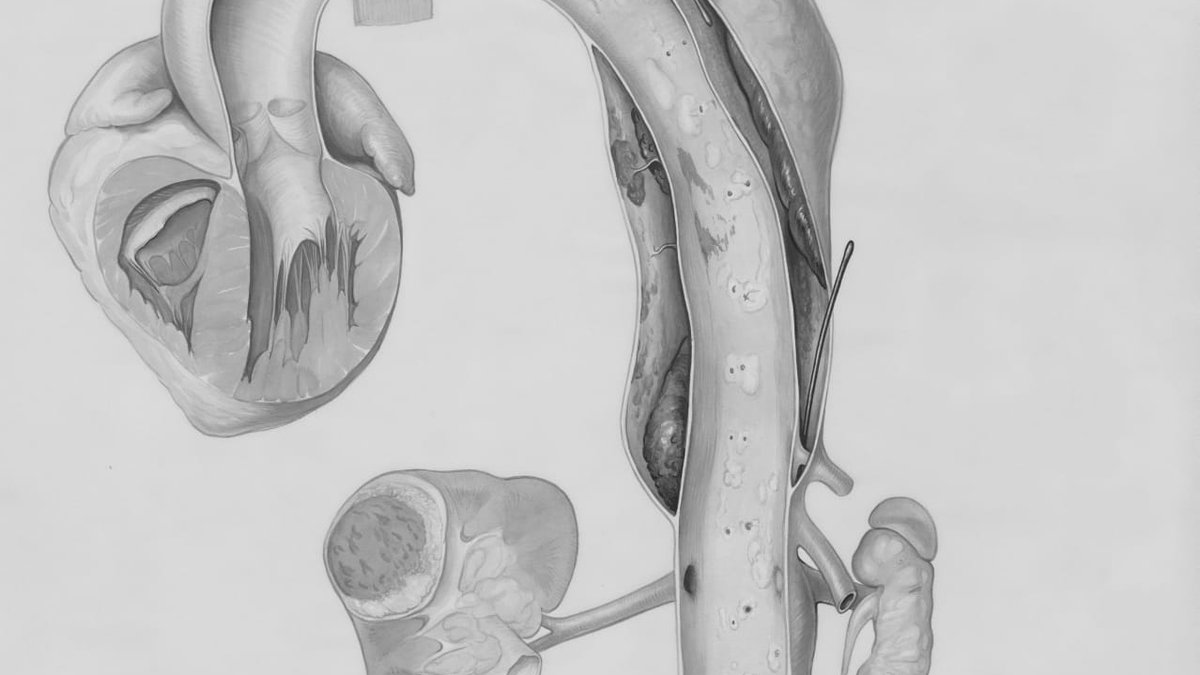
Aortic diseases, such as aneurysms or dissections, are serious conditions that require expert monitoring and timely intervention to prevent life-threatening complications.

The Aorta, and What Can Go Wrong With It
The aorta is the body's main pipe — the wide artery that carries every heartbeat's worth of blood from the heart, arches over, and runs down through the chest and abdomen. Disease of the aorta falls into two broad problems: it can widen and weaken (an aneurysm), or its wall can tear (a dissection).
Most aortic disease is silent and found by chance on a scan done for something else. That is not a reason to relax about it: the danger of an aneurysm is that it gives no warning until it leaks, and the danger of a dissection is that it happens without notice. Both are manageable when known about and monitored.
Most aortic disease is silent and found by chance on a scan done for something else. That is not a reason to relax about it: the danger of an aneurysm is that it gives no warning until it leaks, and the danger of a dissection is that it happens without notice. Both are manageable when known about and monitored.
Aortic Aneurysm: A Widening You Cannot Feel
An aneurysm is a permanent bulge where the aortic wall has weakened. It usually causes no symptoms while it slowly enlarges over years. The concern is rupture, which is frequently fatal, so the whole strategy is to find aneurysms early and repair them before they reach that point.
Size drives the decision. An abdominal aortic aneurysm is generally repaired once it reaches about 5.5 cm, or sooner if it is growing quickly or causing symptoms. Below that, it is watched with a scan every 6 to 12 months, and blood pressure, cholesterol and smoking are treated hard to slow it down.
Size drives the decision. An abdominal aortic aneurysm is generally repaired once it reaches about 5.5 cm, or sooner if it is growing quickly or causing symptoms. Below that, it is watched with a scan every 6 to 12 months, and blood pressure, cholesterol and smoking are treated hard to slow it down.
Aortic Dissection: A Vascular Emergency
A dissection is a tear in the inner lining of the aorta that lets blood force its way between the wall layers. The classic symptom is sudden, severe, tearing or ripping pain in the chest or between the shoulder blades, often described as the worst pain of someone's life, sometimes with a feeling of impending collapse.
This is a call-995, go-to-hospital-now situation. A tear involving the first part of the aorta (Type A) needs emergency surgery; one confined to the lower aorta (Type B) is often managed with intensive blood pressure control and monitoring, with a stent if it progresses.
This is a call-995, go-to-hospital-now situation. A tear involving the first part of the aorta (Type A) needs emergency surgery; one confined to the lower aorta (Type B) is often managed with intensive blood pressure control and monitoring, with a stent if it progresses.
Who Is at Risk, and Who Should Be Screened
Aortic disease shares its risk factors with the rest of atherosclerosis, plus a strong inherited component.
- Smoking is the single biggest driver of abdominal aortic aneurysm; high blood pressure and older age add to it, and men are affected more often
- A family history of aneurysm or dissection markedly raises your own risk — first-degree relatives should be scanned
- Connective tissue conditions such as Marfan and Loeys-Dietz syndrome, and a bicuspid aortic valve, predispose to dissection at younger ages and need lifelong specialist follow-up
- A one-off ultrasound of the abdominal aorta is worth considering for men over 65 who have ever smoked
Diagnosis and Surveillance in Singapore
An ultrasound of the abdominal aorta is quick, painless and the standard screening and monitoring test. For a full anatomical picture — the size, shape, extent and the branch vessels — a CT aortogram is definitive, while an MRI aortogram is preferred for younger patients and repeated surveillance because it avoids radiation.
Once an aneurysm is known, the interval between scans is set by its size and growth rate. We arrange screening, surveillance imaging and specialist review at Paragon Medical Centre on Orchard Road, coordinating with a vascular surgeon when repair is on the horizon.
Once an aneurysm is known, the interval between scans is set by its size and growth rate. We arrange screening, surveillance imaging and specialist review at Paragon Medical Centre on Orchard Road, coordinating with a vascular surgeon when repair is on the horizon.
Treatment: Slowing It Down, and Fixing It in Time
For an aneurysm below the repair threshold, treatment is medical and preventive: stop smoking, get blood pressure well controlled (often with a beta-blocker or an ARB), take a statin, and attend every surveillance scan.
When repair is needed, most aortic aneurysms are now treated by endovascular repair (EVAR or TEVAR) — a stent-graft delivered through a small groin incision, with a short hospital stay. Open surgical replacement with a fabric graft is reserved for anatomy that a stent cannot handle. The right choice depends on the shape of your aorta, and it is a decision made jointly with the vascular surgical team.
When repair is needed, most aortic aneurysms are now treated by endovascular repair (EVAR or TEVAR) — a stent-graft delivered through a small groin incision, with a short hospital stay. Open surgical replacement with a fabric graft is reserved for anatomy that a stent cannot handle. The right choice depends on the shape of your aorta, and it is a decision made jointly with the vascular surgical team.
Aortic Disease: Common Questions
Concerned About Aortic Disease?
Dr. Peter Chang offers specialist assessment and personalised management at Paragon Medical Centre, Singapore.