Cardiac~5 min
Electrocardiogram (ECG)
A quick, painless test that records the electrical signals in your heart to detect arrhythmias and other conditions.
An electrocardiogram (ECG) is a non-invasive recording of the heart's electrical activity, captured across 12 leads simultaneously. It is the primary cardiac investigation — performed in under five minutes with immediate results and no radiation.
Book This Evaluation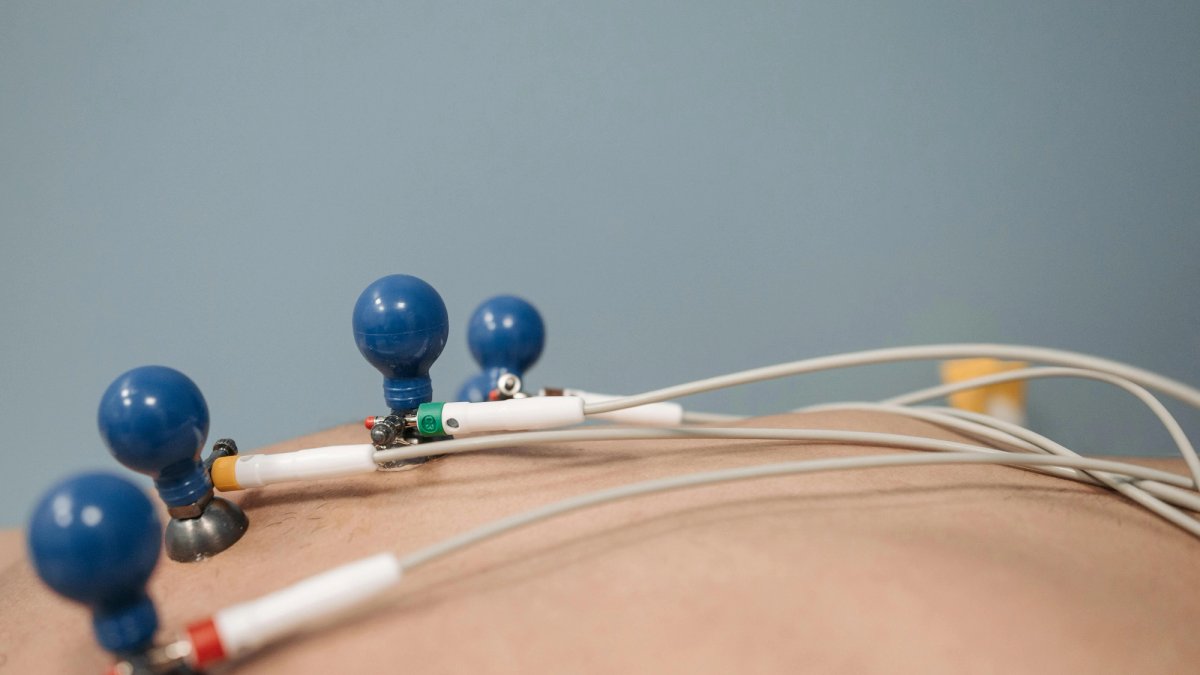
An ECG captures the heart's electrical signals to instantly identify abnormal rhythms and other critical conditions.
What an ECG Shows
An electrocardiogram (ECG) records the heart's electrical activity from twelve angles at once, and prints it as a set of familiar wavy lines. It is the first and fastest cardiac test we do — painless, over in a couple of minutes, and with no radiation.
From that short recording we can see an abnormal rhythm that is present at the time, the tell-tale changes of a heart attack happening now or one that occurred in the past, a thickened heart muscle, a block in the electrical wiring, pre-excitation patterns such as Wolff-Parkinson-White, and sometimes the effect of an electrolyte problem or a medication.
From that short recording we can see an abnormal rhythm that is present at the time, the tell-tale changes of a heart attack happening now or one that occurred in the past, a thickened heart muscle, a block in the electrical wiring, pre-excitation patterns such as Wolff-Parkinson-White, and sometimes the effect of an electrolyte problem or a medication.

How the Test Is Done
Ten small sticky electrodes are placed on the chest, arms and ankles. You lie still on a couch for about thirty seconds while the machine records, then the stickers come off.
There is nothing to prepare and nothing to feel. Men may need a small patch of chest hair trimmed so the electrodes stick. You keep your trousers on and only the chest is exposed. The whole visit takes about five minutes.
There is nothing to prepare and nothing to feel. Men may need a small patch of chest hair trimmed so the electrodes stick. You keep your trousers on and only the chest is exposed. The whole visit takes about five minutes.
What It Can and Cannot Tell Us
A resting ECG is a ten-second snapshot, and that is its main limitation. It is excellent for a heart attack in progress or a rhythm disturbance that is happening at that moment.
It does not reliably rule out narrowed coronary arteries, because between angina episodes the ECG is often completely normal, and it will miss an arrhythmia that comes and goes. When the ECG is normal but the story is not, we add a stress test, a CT coronary angiogram, or an ambulatory monitor that records over days.
It does not reliably rule out narrowed coronary arteries, because between angina episodes the ECG is often completely normal, and it will miss an arrhythmia that comes and goes. When the ECG is normal but the story is not, we add a stress test, a CT coronary angiogram, or an ambulatory monitor that records over days.
When We Recommend One in Singapore
An ECG is part of almost every cardiac assessment.
- Chest pain, palpitations, breathlessness, dizziness or a blackout
- Before surgery, and before starting certain heart or psychiatric medications that can affect the rhythm
- As a baseline in a health screen, before taking up vigorous exercise after 40, or with a family history of sudden death
- As a standalone test in Singapore an ECG costs roughly SGD 30 to SGD 60, and it is usually included at no extra charge within a cardiac screening package

Getting and Understanding Your Result
The tracing is available immediately, and we go through it with you against your symptoms and any previous ECGs — comparison with an old recording often matters more than the reading alone, so bring any you have.
A borderline or abnormal ECG is a prompt for the next test — an echocardiogram, a stress test, a Holter monitor or blood tests — rather than a diagnosis in itself. A normal ECG in someone with worrying symptoms is reassuring but not the end of the assessment.
A borderline or abnormal ECG is a prompt for the next test — an echocardiogram, a stress test, a Holter monitor or blood tests — rather than a diagnosis in itself. A normal ECG in someone with worrying symptoms is reassuring but not the end of the assessment.
Electrocardiogram (ECG): Common Questions
Ready to Schedule Your Electrocardiogram (ECG)?
Most evaluations are available on the same day as your consultation with Dr. Peter Chang at Paragon Medical Centre, Singapore.