Cardiac24 hrs – 3 yrs
Ambulatory Electrocardiogram
A portable ECG device worn over 24 hours or longer to record your heart's rhythm as you go about your daily routine.
Ambulatory ECG monitoring provides continuous heart rhythm recording during normal daily activities to detect arrhythmias that a standard resting ECG cannot capture. Monitoring periods range from 24 hours to 3 years depending on the device.
Book This Evaluation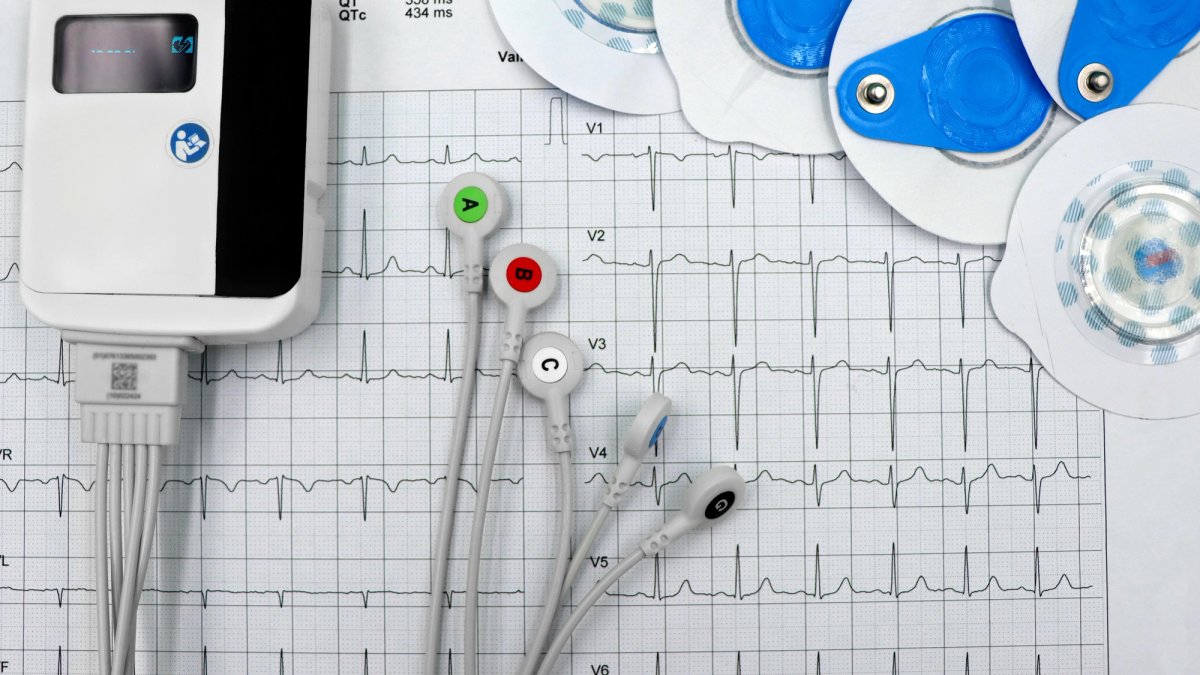
A wearable monitor continuously records your heart rhythm during normal activities, capturing irregular beats that a standard ECG might miss.
Why a Standard ECG Often Misses the Problem
A resting ECG is a 10-second snapshot. If your palpitations come once a day, or your dizzy spells once a week, the odds of the recording catching one are slim.
An ambulatory ECG solves this by recording every heartbeat for a much longer stretch — a full day, two weeks, or, with an implanted device, up to three years. You press a button or note the time whenever you feel a symptom, and Dr. Chang can then line the symptom up against exactly what the rhythm was doing at that moment. That link between what you feel and what the heart is doing is the whole point of the test.
An ambulatory ECG solves this by recording every heartbeat for a much longer stretch — a full day, two weeks, or, with an implanted device, up to three years. You press a button or note the time whenever you feel a symptom, and Dr. Chang can then line the symptom up against exactly what the rhythm was doing at that moment. That link between what you feel and what the heart is doing is the whole point of the test.

The Different Devices
Which device we choose depends on how often the symptoms come.
- 24 to 48-hour Holter — a small recorder with chest wires, for daily or near-daily symptoms
- 7 to 14-day patch — a single water-resistant sticker worn on the chest, far more comfortable and discreet
- 30-day event recorder — worn intermittently and activated when a symptom starts
- Implantable loop recorder — a device the size of a paperclip placed under the skin, for rare but serious episodes such as unexplained blackouts
What It Picks Up
The recording is analysed beat by beat for:
- Paroxysmal atrial fibrillation — the intermittent form that raises stroke risk and is easy to miss
- Fast rhythms from the upper or lower chambers
- Slow rhythms and pauses that may explain dizziness or a blackout
- The AF burden — what proportion of the day the heart spent in atrial fibrillation
- Whether your symptoms line up with a genuine rhythm change or, reassuringly, with a normal heartbeat
Wearing It in Singapore
You come in for a few minutes to have the device fitted, then go about an ordinary day — work, exercise, sleep. Keep a brief diary of symptoms and activities. A traditional Holter must be kept dry, so no swimming or showering; the patch monitors are splash-proof and much easier to live with in the local climate.
Privately in Singapore a 24-hour Holter costs roughly SGD 250 to SGD 400 and an extended patch study SGD 400 to SGD 700. Medisave can often be applied when the test is done to investigate symptoms.
Privately in Singapore a 24-hour Holter costs roughly SGD 250 to SGD 400 and an extended patch study SGD 400 to SGD 700. Medisave can often be applied when the test is done to investigate symptoms.
Understanding Your Result
Dr. Chang reviews the full analysis with you: what rhythm was recorded, whether any abnormal beats matter, and how they relate to your diary. A completely normal recording during a week when you had typical symptoms is genuinely useful — it points the search away from the heart's rhythm. Where atrial fibrillation is found, the result directly shapes decisions about blood thinners, rate or rhythm medication, and whether to consider an ablation.
Ambulatory Electrocardiogram: Common Questions
Ready to Schedule Your Ambulatory Electrocardiogram?
Most evaluations are available on the same day as your consultation with Dr. Peter Chang at Paragon Medical Centre, Singapore.