Cardiac24 hrs
Ambulatory Blood Pressure Monitoring
A wearable device that measures your blood pressure at regular intervals over 24 hours to provide a highly accurate diagnosis.
Ambulatory blood pressure monitoring (ABPM) is a 24-hour automated blood pressure recording performed during normal daily activity and sleep. It is the gold-standard investigation for accurate hypertension diagnosis, overcoming the limitations of single clinic readings.
Book This Evaluation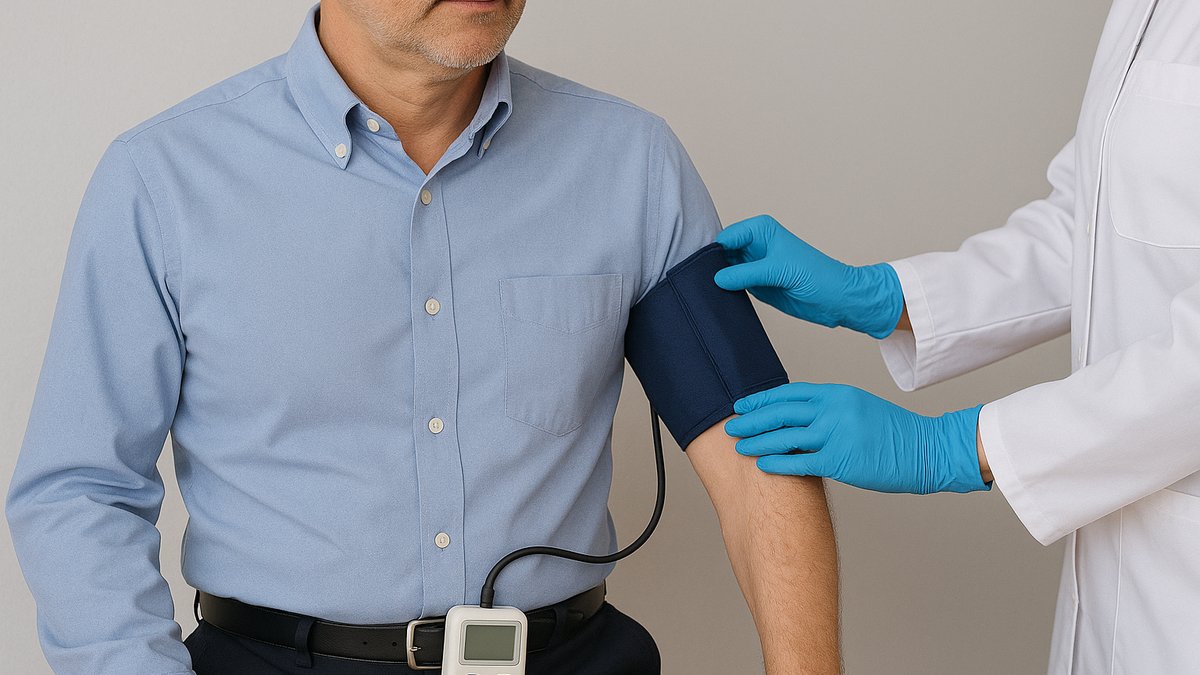
A portable monitor automatically measures blood pressure throughout the day and night to uncover hidden patterns.
Why One Clinic Reading Is Not Enough
Blood pressure moves constantly — up with a rushed journey to the clinic, up again the moment a cuff goes on, down during sleep. A single reading in a consulting room can easily be 15 or 20 mmHg adrift from your true average, in either direction.
Ambulatory blood pressure monitoring settles the question. A small monitor takes a reading every 20 to 30 minutes through a normal working day and every 30 to 60 minutes overnight, then produces an average that predicts stroke and heart attack risk far better than any clinic measurement. It is the reference standard for diagnosing hypertension.
Ambulatory blood pressure monitoring settles the question. A small monitor takes a reading every 20 to 30 minutes through a normal working day and every 30 to 60 minutes overnight, then produces an average that predicts stroke and heart attack risk far better than any clinic measurement. It is the reference standard for diagnosing hypertension.

What It Reveals
The 24-hour picture separates several patterns that a clinic check cannot:
- White coat hypertension — high in the clinic, normal in daily life, so treatment may not be needed
- Masked hypertension — normal in the clinic but genuinely high the rest of the time, which carries real risk and is easily missed
- Nocturnal hypertension — pressure that fails to dip during sleep, a strong warning sign for the heart and kidneys
- Whether current medication is holding pressure down across the full 24 hours, or wearing off before the next dose
Wearing the Monitor
A cuff is fitted to your upper arm and connected to a device on a belt or shoulder strap. Wear a loose-sleeved top. Each reading takes about a minute — keep the arm still and relaxed when the cuff inflates. Otherwise carry on with an ordinary day, including work and light exercise, and keep a short diary of activities, sleep and any medication times. The device must be kept dry, so no showering during the recording.
Reading the Result in Singapore
The thresholds for ambulatory readings are lower than for clinic ones:
- Daytime average at or above 135/85 mmHg — hypertension
- Night-time average at or above 120/70 mmHg — nocturnal hypertension
- 24-hour average at or above 130/80 mmHg — sustained hypertension
- Privately in Singapore an ABPM study costs roughly SGD 150 to SGD 300, and Medisave can often be applied when it is done to investigate raised readings
What Happens Next
Dr. Chang reviews the full trace with you: your true average, how far the pressure falls at night, and how well any treatment is working. A confirmed diagnosis leads to a personalised target and, where needed, medication timed to your own pattern — an evening dose, for instance, when the night-time pressure is the problem. A reassuringly normal study spares you unnecessary lifelong treatment, though we would still recommend a repeat check in a year or two.
Ambulatory Blood Pressure Monitoring: Common Questions
Ready to Schedule Your Ambulatory Blood Pressure Monitoring?
Most evaluations are available on the same day as your consultation with Dr. Peter Chang at Paragon Medical Centre, Singapore.