Venous
Spider Veins
Small, damaged veins that can appear on the surface of the legs or face, looking like spider webs.
Spider veins are small, visible surface vessels on the legs or face — treatable with sclerotherapy or laser therapy. A vascular assessment is recommended to exclude underlying venous insufficiency before treatment begins.
Book a Consultation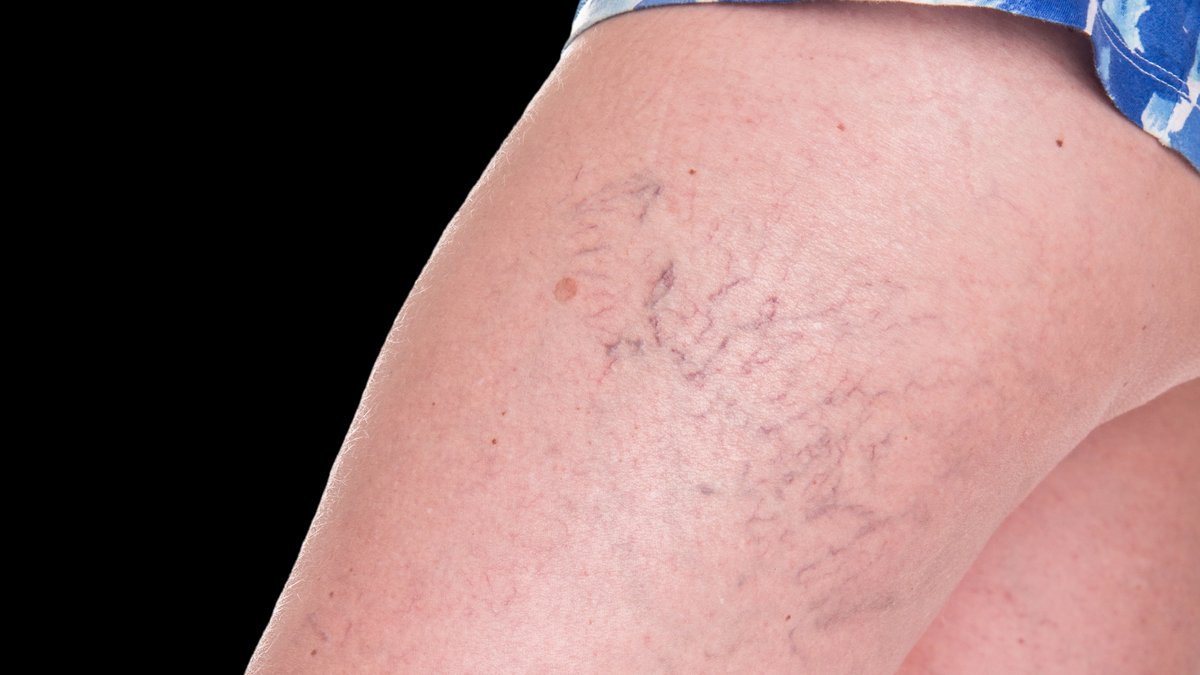
Spider veins are typically a cosmetic issue but can sometimes signal underlying venous problems that require professional evaluation.

Spider Veins: Tiny Surface Vessels
Spider veins — the medical term is telangiectasia — are fine, thread-like clusters of red, blue or purple vessels sitting just under the surface of the skin, usually less than a millimetre across. They are most common on the thighs, the outer calf, around the ankle, and on the face.
In most people they are a purely cosmetic matter and cause nothing at all. Occasionally they are the visible edge of a larger venous problem, and that possibility is worth ruling out before treating them, because otherwise they tend to come back quickly.
In most people they are a purely cosmetic matter and cause nothing at all. Occasionally they are the visible edge of a larger venous problem, and that possibility is worth ruling out before treating them, because otherwise they tend to come back quickly.
Why They Appear
Spider veins reflect a mix of inherited tendency and things that raise the pressure or fragility of small skin vessels.
- A family history of spider or varicose veins
- Hormones — pregnancy, the oestrogen-containing pill, and hormone replacement therapy
- Long hours standing or sitting, and being overweight
- Ageing, and, for facial vessels, cumulative sun exposure
- A previous knock or injury to the area
When to Check for Something Deeper
Spider veins on their own, with comfortable legs, need only cosmetic treatment if you want it. A duplex ultrasound first is worthwhile if there is aching, heaviness or ankle swelling as well, if there are varicose veins in the same leg, or if there is a fan of fine veins spreading around the inner ankle.
The reason is simple: if a larger vein higher up is leaking and feeding pressure into the skin, treating only the surface vessels gives a poor and short-lived result. Fixing the source first, then tidying the surface, works far better.
The reason is simple: if a larger vein higher up is leaking and feeding pressure into the skin, treating only the surface vessels gives a poor and short-lived result. Fixing the source first, then tidying the surface, works far better.
Treatment: Sclerotherapy and Laser
The two mainstays are injections and surface laser, often used together.
- Microsclerotherapy — a tiny amount of solution is injected with a very fine needle to collapse the vessel; the gold standard for leg spider veins, done in the clinic with no downtime, typically 2 to 4 sessions, with the vessels fading over 4 to 8 weeks and compression worn briefly afterward
- Surface laser — best for very fine vessels and for the face, where injections are trickier; often complements sclerotherapy
- Expect improvement rather than perfection; new spider veins can appear over time, and because it is cosmetic, treatment is not Medisave-claimable. A session costs roughly SGD 300 to SGD 600 in Singapore
Spider Veins: Common Questions
Concerned About Spider Veins?
Dr. Peter Chang offers specialist assessment and personalised management at Paragon Medical Centre, Singapore.